VRENTY CAR · SARANDA
Gjirokaster from Saranda: a full day for the historic city
Gjirokaster changes the rhythm of a coastal holiday. Plan the drive around time on foot in the historic city, rather than collecting several inland stops in one day.
Reviewed 20 September 2026
On this page
Build the day around one main visit
Gjirokastra forms part of the UNESCO listing for the historic centres of Berat and Gjirokastra. Allow time to arrive, park, walk and eat before setting a return target. Current traffic and the final approach matter more than a single optimistic map estimate.
Keep the car outside difficult old-town lanes
Identify a lawful parking option on a suitable approach and explore from there. Ask your accommodation or destination for current access instructions if you have a specific booking. A route to a front door may involve steep or restricted lanes that are poor choices for an unfamiliar rental.
Parking and driving in Saranda: handle the small details early
Match the walking plan to your group
Consider slopes, uneven surfaces, heat and time to rest. Choose a shorter visit if that makes the day more comfortable. Confirm current opening and access arrangements for any paid attraction instead of assuming every stop can be added on arrival.
Treat the Blue Eye as an optional extension
The southern Blue Eye is a separate drive-and-walk visit. Adding it means another parking stop and time away from the car. If Gjirokaster is the reason for travelling inland, give the city priority and keep the return unhurried.
Official information: UNESCO: Gjirokastra ↗
Check the route from your actual starting point, current travel time and permitted access.
Make the historic city the reason for the drive
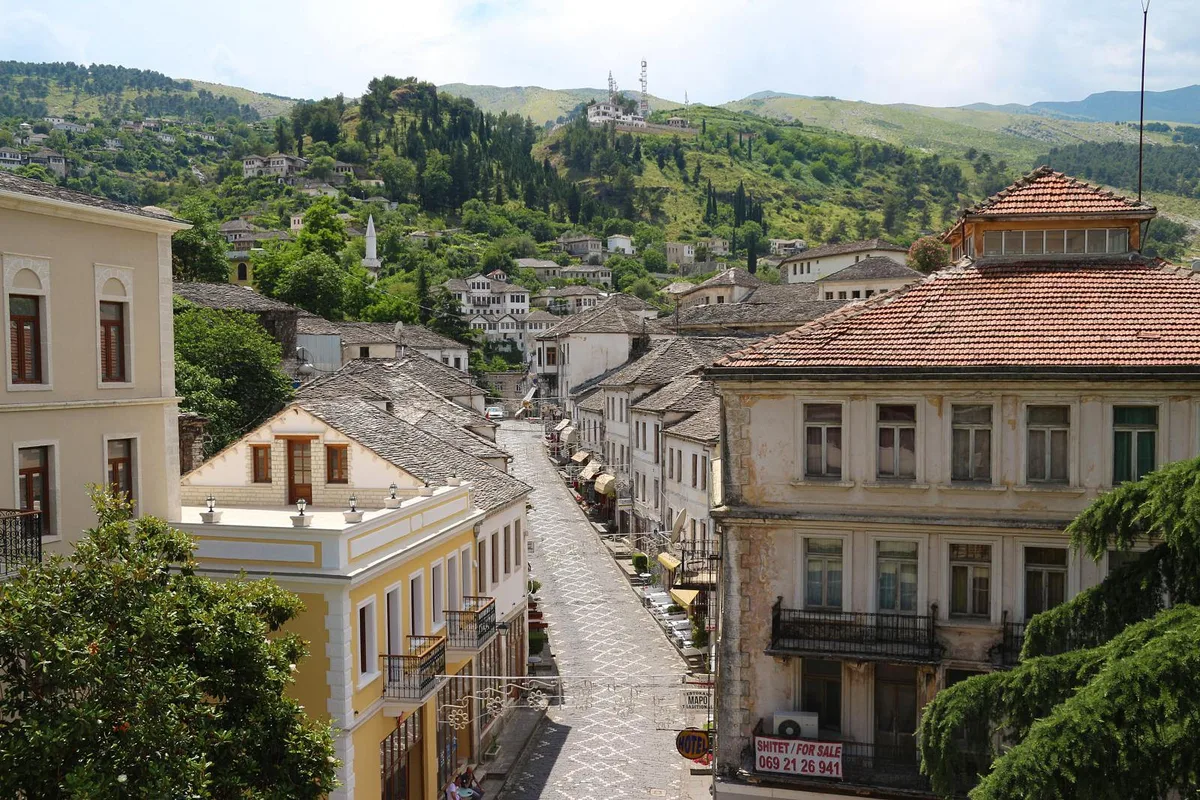
A trip from Saranda to Gjirokaster works best when the city has the main share of the day. The road is the connection between your coastal base and time spent exploring on foot. Decide what interests you before adding other inland stops: the historic streets, a particular attraction, a meal or simply a slower walk through the older city. One clear purpose makes it easier to judge whether an extra stop improves the outing or merely reduces the time at the destination you wanted to see.
Gjirokastra forms part of UNESCO's listing for the historic centres of Berat and Gjirokastra. Use the official description for background, then check current visitor information for the places you intend to enter. Heritage status tells you why a place is significant; it does not establish today's opening hours, parking rules or access to every building. Keep those questions separate when planning. A well-informed visit can be selective without trying to reproduce an entire historical itinerary in one day.
Agree the expected pace with the group. A traveller who wants to read displays and spend time in a museum will need a different schedule from someone who mainly wants a walk and lunch. The rental car gives you control over the drive, but the day will feel more relaxed if passengers share a realistic idea of how much time they want in the city.
Build the day from the visit backwards
Begin with the time you want to spend in Gjirokaster, including parking, walking, breaks and a meal. Add the outward and return drives using current navigation as a guide, then leave room for ordinary delays. A road estimate alone is not a day-trip estimate. The final approach, the walk from parking and the time needed to return to the car can be substantial parts of the outing. Choose a departure from Saranda that gives the city enough time without depending on the fastest possible journey.
Set a comfortable return target based on the driver and the group's plans that evening. Leave a margin for the last walk back to the vehicle and a rest before driving. If you have a fixed dinner, rental return or ferry later, ask whether this is the right day for the excursion at all. A route that fits geographically may still create an awkward schedule. Moving it to a less constrained day can improve the holiday more than choosing a slightly faster road.
Keep optional stops visibly optional. If you depart late, remove one before you reach the city rather than squeezing all the activities into less time. An itinerary should tell you what matters most when circumstances change. That allows a delayed start to become a simpler day instead of a sequence of rushed visits and a pressured drive back.
Review the route before accepting shortcuts
Check the broad route from your Saranda accommodation to a suitable Gjirokaster parking approach. Save the destination and review the main direction while you have time to think. Navigation can then help with current conditions without becoming your only source of judgment. If a suggested shortcut leaves a suitable paved road or enters an unfamiliar lane, assess it before following. A small displayed time saving does not tell you whether the route fits the rental agreement or the driver's comfort.
Ask the supplier about any specific uncertain segment before the outing. Naming Gjirokaster as a destination may not explain the particular road or old-town approach you are considering. Send the exact location or route detail needed for an answer. If permission or suitability remains unclear, use a known appropriate route and park outside the difficult section. A larger vehicle is not a solution to unclear road permission, and off-road capability does not change the agreement.
Keep the return route in mind too. A road that seems manageable in daylight may feel more demanding when the driver is tired or visibility has changed. Build a plan that leaves you enough daylight for unfamiliar sections where practical. If the day runs late, choose a straightforward return and reduce further stops. The main visit should not depend on taking more risk with the drive.
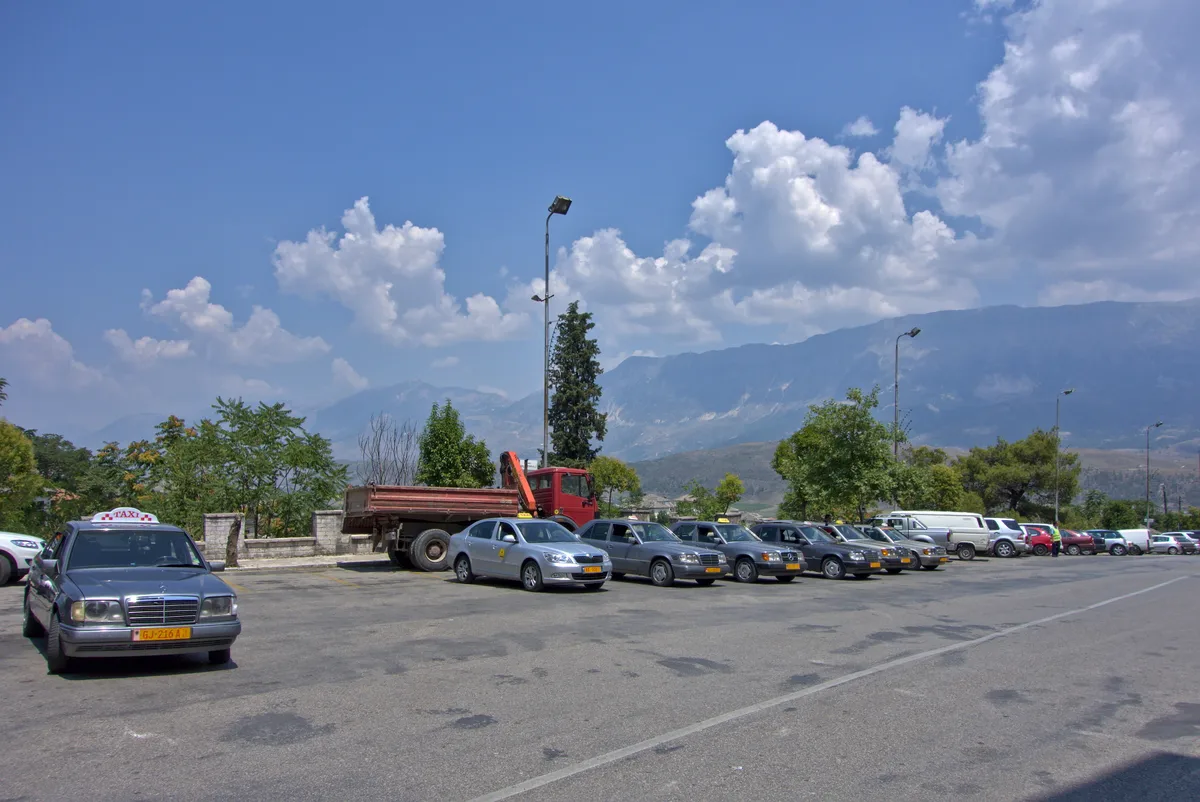
Choose parking before entering the old-town lanes
Identify a lawful parking option on a suitable approach before you reach the older parts of Gjirokaster. The historic city's slopes and narrow streets are reasons to think about parking early, not reasons to search for the closest possible space after arrival. Ask your destination for current access advice if you have a specific reservation. A map route to a building may end at a pedestrian or restricted approach that is unsuitable for an unfamiliar rental car.
Assess the walking route from parking as well as the driving route to it. The nearest space on a flat map may not give the easiest walk if the route involves a steep climb. Ask about gradients and steps where those matter to the group. Consider whether you prefer to start with the more demanding walking section or finish closer to the car. The right parking choice is the one that supports the visit you can comfortably make, not simply the one with the shortest straight-line distance.
Have a second option if the first lot is full or access has changed. Follow current signs and authorised instructions at arrival, and avoid stopping across an entrance while trying to solve the problem. A little more walking from a clear parking arrangement may be better than manoeuvring through narrow streets in search of an uncertain space. Park, secure the car and begin the visit on foot.
Treat steep approaches as a planning constraint
Gjirokaster's older streets call for a different mindset from a level waterfront walk. Slopes, steps and uneven surfaces can affect how much ground the group wants to cover. Choose footwear for those conditions and give yourself time to pause. If a passenger has limited mobility, ask specific questions about the route between parking and the intended attraction. The fact that a building is open to visitors does not establish that every approach is accessible to every person.
Do not assume driving closer solves the walking problem. The last lane may be narrow, restricted or difficult to turn in, and a car may have nowhere suitable to stop. Contact the destination about current drop-off options if close access is important. Make sure any proposed arrangement fits the road rules and the rental agreement. It is better to know that a particular visit is impractical than to arrive with a plan that depends on an unconfirmed exception.
Build a route that can become shorter without leaving anyone stranded far from the car. Identify where the group can turn back or rest, and keep the parked location easy to find. If different people choose different walking distances, agree a meeting point with suitable facilities. A good city visit respects the group's pace instead of treating every slope as something to overcome for the sake of a complete checklist.
Select a few places to enter
Choose the attractions that matter most and check their current opening and admission information before the trip. A historic-city visit can include several kinds of experience, but each paid or indoor stop adds its own entry, viewing and walking time. Do not assume you can enter every place mentioned in a travel article during one day from Saranda. A smaller selection often leaves more time to appreciate the streets between them and take a proper break.
If one attraction is essential, place it early enough that an ordinary delay does not remove it from the day. Check whether booking, a guide or a particular language service is needed. Ask about any current closure or access limitation relevant to your visit. Do not rely on a broad city opening-hours search to answer a question about a specific building. Keep the confirmation or current information with your route notes.
Leave at least part of the walk uncommitted. You may find a view, a street or an interpretation panel that deserves longer than expected. The value of a rental day trip is not measured by how many ticketed entrances you use. A coherent route through a few places can give a stronger sense of the city than repeated hurried entries followed by a long drive back.
Plan a walking route that has a sensible finish
Look at the relationship between your parking area, the places you want to visit and where you might eat. Try to avoid repeatedly crossing the same steep section because the itinerary was assembled as a list rather than a route. A loop can be useful when it follows suitable public paths, but it is not a requirement. An out-and-back walk with a clear turn-around point may be easier for a group with mixed energy or limited time.
Use current pedestrian directions and signs to navigate the older streets. Do not assume a route suitable for a person is suitable for the car, or vice versa. Save the parking point independently so that you can return even if you finish the visit at a different place than expected. A screenshot of the wider area can help when a connection is weak, but remain attentive to current access restrictions and signs on the ground.
Think about the end of the walk when choosing the start. If the final stage involves a climb, leave enough energy and time for it. A meal near the end may help the group rest before returning to the vehicle. Avoid planning to reach the car at the exact moment you need to depart for Saranda. The pause to load bags, set navigation and settle the driver belongs in the schedule too.
Give lunch and rest their own place
A meal is part of the day rather than an interruption to sightseeing. Choose whether you want a planned stop or the freedom to decide after walking. If you reserve a place, check the arrival arrangements and allow for the route on foot. Do not book a meal time so tightly after the drive that parking uncertainty creates immediate pressure. A flexible meal can be useful, but it still needs enough time in the total itinerary.
Consider what the group needs during breaks: seating, shade, toilets or simply time without walking uphill. If a particular facility is important, confirm it rather than inferring it from photographs. Keep water with you and avoid depending entirely on finding a convenient purchase at exactly the right moment. The details matter more when children or older travellers are part of the group and the pace changes throughout the day.
Use the meal as a natural decision point for the afternoon. Check whether the main visits are complete and whether everyone still wants another stop. You may choose a shorter walk back to the car instead of adding another attraction. That can leave the driver more comfortable for the return and allow the group to enjoy the visit already made rather than ending the day exhausted.
Make an overnight stay a distinct option
An overnight stay in Gjirokaster can change the visit from a full return drive into a slower part of a wider itinerary. Compare it as a separate plan, including accommodation access, parking, luggage and the next day's destination. Ask the property for the actual vehicle approach before booking if the car is important to your stay. A room in a historic area may have a different parking arrangement from its pedestrian entrance. Do not assume you can unload at the front door.
Check whether parking is reserved, shared or off-site and what happens if you arrive later than planned. Explain the size of the vehicle and any equipment you need to unload. Save the contact and entrance instructions offline. If the property recommends a drop-off point, confirm where the car should go afterwards and how you return on foot. These details can be more useful than simply choosing accommodation described as central.
An overnight stop does not alter the rental return location by itself. If you want to finish the hire away from Saranda, ask about one-way availability and cost before booking the room around that assumption. If the car will return to Saranda, keep the agreed return time in the next day's plan. The extra night should create useful time in the city, not introduce an unconfirmed handover elsewhere.
Treat the Blue Eye as a separate drive-and-walk stop
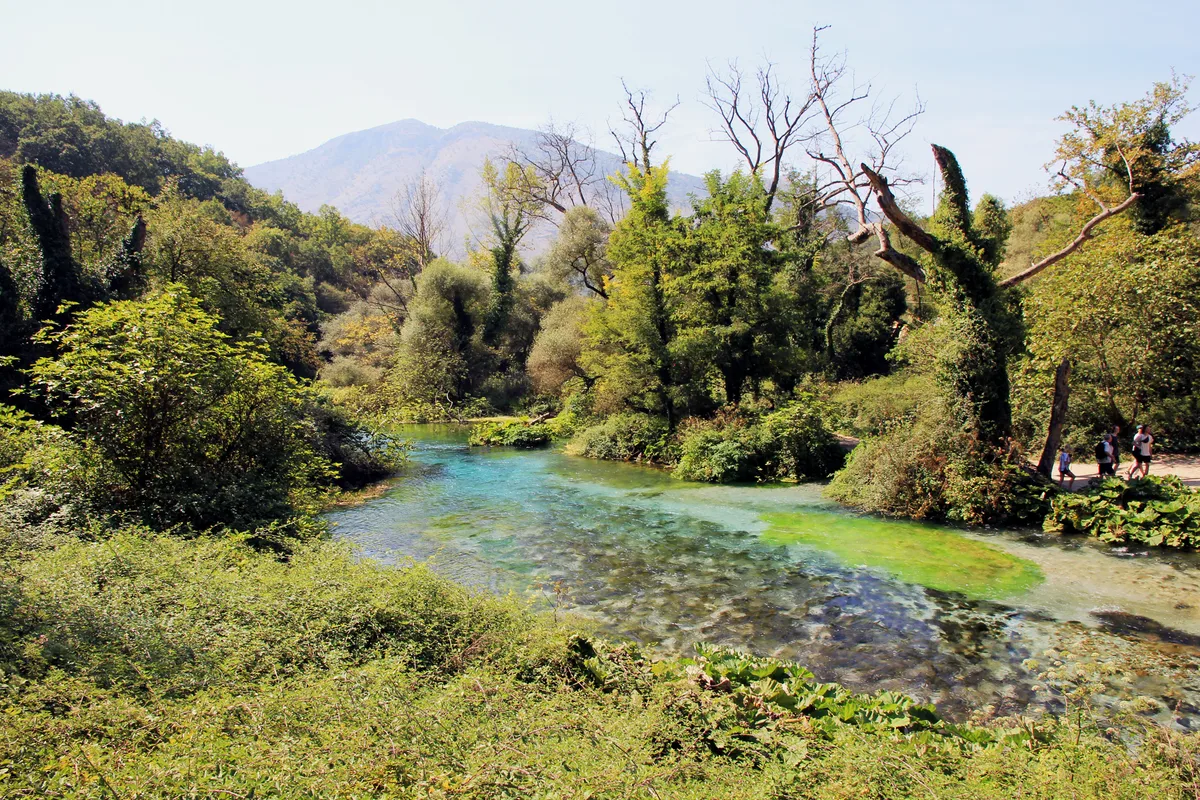
The southern Blue Eye near Krongj can be considered on an inland itinerary, but it requires its own parking and walking time. It is not a view you necessarily collect by pausing beside the car. Check current access and the walk before adding it to the Gjirokaster day. If the city is your main destination, decide whether the nature visit still leaves enough time for the particular streets or attractions you wanted to see.
Consider the order in terms of energy and opening arrangements. A nature walk first may reduce the time or enthusiasm left for slopes in the city. A city visit first may leave too little time for the Blue Eye's current visitor process. There is no universal sequence that suits every group. Use the actual plans, walking ability and current information to choose, and keep one stop optional when the combined day feels crowded.
At the decision point, be willing to continue directly to the main destination or return to Saranda. The fact that two places share an inland direction does not make both necessary on the same rental day. Giving them separate days can produce two enjoyable outings with different rhythms. A car offers flexibility to make that choice rather than requiring you to combine every nearby pin.
Keep family and group expectations realistic
For a family, consider the combined effort of the drive, walking surfaces and time between breaks. A child who is comfortable in the car may still find a long uphill visit demanding. Choose a manageable route and allow room to stop early. Confirm suitable restraints for the rental, then plan the city visit separately around the children. Carry only what you can manage on foot and think carefully before bringing bulky beach equipment that will not be used.
For a group of adults, agree which visits are shared and where people may split. One person may want more time in an attraction while another prefers a café or shorter walk. A clear meeting plan can make that work without forcing everyone into the same pace. Share the parking location and make sure the person with the keys will be available when the group expects to leave. Avoid a plan in which the driver must repeatedly move the car through difficult streets to collect people.
If another person may drive back, confirm their authorised-driver status before the excursion. Do not leave that arrangement until the main driver is tired. A comfortable return is a shared planning responsibility, even when only one person is at the wheel. Keep the day's ambition within what the group can enjoy and still complete the drive without strain.
Choose the car for the road and the parking at both ends
Select a vehicle that fits the passengers and the luggage you actually need. For a day trip, you can usually leave most holiday bags at your Saranda base, but an overnight move needs the full load considered. Check transmission and driver comfort, and assess the size against the hotel or parking entrance at each end. A larger category can add room while making narrow access less convenient. The best choice is the one that fits the whole journey.
Check mileage and rental timing for the full itinerary, including other excursions. Keep fuel, parking and admission costs separate from the rental total. If the trip falls near the end of the hire, leave time for the agreed fuel and return process. A lower daily rate is not useful if the chosen period forces the city visit into a tight final-day schedule. Compare workable plans before comparing only the car categories within them.
Read the deposit and cover conditions for the selected offer without expecting them to resolve route suitability. No-deposit availability is a financial condition, while permitted roads and incident procedures remain part of the agreement. Once those requirements fit, you can focus on the trip's real decisions: where to park, what to visit and how much walking gives the group a worthwhile day.
Adapt the visit to current weather and road conditions
Check the forecast for both Saranda and the inland destination before departure. Conditions at the coast are not a complete guide to how a day in Gjirokaster will feel. Consider the effect on walking surfaces, visibility and the drive back. Bring what the group needs for the expected weather without turning the day bag into a full suitcase. If the forecast makes the intended walk unattractive, compare another day during the rental rather than forcing the original plan.
Use current road information and navigation for the approach, while keeping the agreement's restrictions in mind. If a closure or diversion appears, assess the alternative before following it. Ask about an uncertain road instead of assuming any detour is authorised because the main route is unavailable. A change in conditions may justify shortening the excursion or choosing another destination. The car's flexibility is useful only when the revised route remains suitable.
Let weather influence the amount you attempt, not only the clothing you pack. A hot afternoon may call for more breaks and fewer slopes; wet conditions may make a shorter route more comfortable. Keep the main priority visible so you can preserve the most important part of the visit while dropping less useful additions. A responsive plan is more likely to leave the group satisfied.
Return from the city without chasing lost time
Set a point in the afternoon when you begin the walk back to the car, rather than treating departure as the moment you leave the last attraction. Include any climb, the route through the streets and a short rest before driving. If the visit has run longer than planned, remove a remaining stop. Do not try to make the road journey compensate for time spent enjoying the city. A good day trip can finish later than expected only when the rental and onward plans allow it.
Before driving, check the car's surroundings, load bags securely and set the return route. If the driver needs food, water or a break, address that before joining the road. Keep the final approach to the Saranda property saved and know the parking alternative if the usual space is unavailable. These ordinary tasks can feel harder after a long day, which is why it helps to make the decisions earlier.
If a fixed rental return or ferry makes the schedule tight, reconsider placing Gjirokaster on that day. The city visit should not become a reason to rush the handover or reduce the transport buffer. A separate excursion day can be more valuable than a clever-looking sequence of connected bookings. Use the car to make a full visit possible, with a return that remains part of a comfortable holiday.
Leave Saranda with a clear city plan
Before departure, confirm a suitable road approach, a primary and alternative parking choice and the current information for any attraction you consider essential. Agree the amount of walking and the main purpose of the day with the group. Pack footwear and water for the city rather than assuming a beach-day bag will serve every outing. Keep the parked location, accommodation entrance and return target available offline where practical.
Use one main visit and a small number of supporting choices to shape the day. You can add a meal, a short walk or another stop when the time is genuinely there. Keep the Blue Eye separate in your thinking even if you may combine it. That prevents a road connection from hiding the effort of two substantial walks. The itinerary should still feel worthwhile when the optional part is removed.
Compare Saranda rentals through Vrenty Car using the needs this plan establishes: a suitable car, enough time in the rental period, clear payment terms and a collection that does not place the drive immediately after a tiring ferry arrival. Gjirokaster can then be a full change of scene during a coastal stay. The car gets you to the city, while the plan gives you time to experience it.